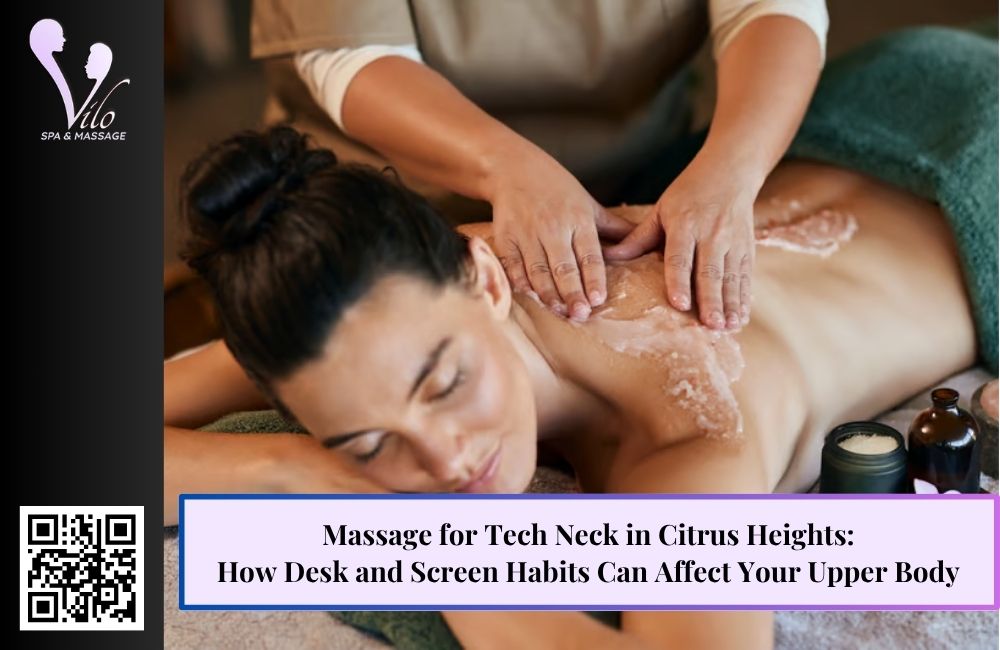
Massage for Tech Neck in Citrus Heights: How Desk and Screen Habits Can Affect Your Upper Body
Hours spent looking at laptops, phones, tablets, and multiple monitors can leave the neck and shoulders feeling tired long before the workday ends. For Citrus Heights residents who spend much of the day on screens, professional massage therapy may provide short-term relief from ordinary muscular tension while offering a chance to reset after prolonged sitting and repetitive computer use. The most effective approach, however, combines massage with better workstation habits, regular movement, and medical evaluation when symptoms go beyond simple muscle tightness.
Can Massage Help With “Tech Neck”?
Massage may help some people feel temporary relief from neck and shoulder tension related to desk work and screen use. Research reviewed by the National Center for Complementary and Integrative Health suggests massage may provide short-term benefits for neck or shoulder pain, although the effects may not last and evidence remains mixed.
Massage may be worth considering when you experience:
Tight shoulders after computer work
Upper-back fatigue
Mild neck stiffness
Muscle tension from prolonged sitting
General stress combined with screen-heavy routines
Massage should not be used to diagnose or treat nerve problems, injuries, or serious causes of neck pain.
What Is “Tech Neck”?
“Tech neck” is an informal term commonly used to describe neck and upper-body discomfort associated with prolonged use of phones, laptops, and other screens.
It is not a formal medical diagnosis.
The discomfort often develops because people remain in similar positions for long periods while viewing screens, typing, scrolling, or working.
How Screen Habits Affect the Upper Body
Computer and phone use can influence several areas at once.
The Head May Move Forward
When the screen is too low or far away, people may move their head forward to see more clearly.
OSHA recommends keeping the head level, forward-facing, and generally aligned with the torso when using a computer workstation.
Shoulders May Begin to Round
Long periods of typing or reaching for a mouse can leave the shoulders held forward or elevated.
OSHA’s workstation guidance recommends keeping the shoulders relaxed and the upper arms close to the body.
The Upper Back Works Continuously
Muscles around the shoulder blades help support the upper body throughout the day.
When the same posture is maintained for hours, these muscles may feel tired or tight.
Phones Encourage Downward Viewing
Smartphones often create a different challenge because screens are held below eye level.
OSHA specifically recommends using tablets and smartphones with relaxed shoulders, arms near the torso, and the neck in a neutral position without excessive bending.
Common Signs of Screen-Related Muscle Tension
People with desk-heavy routines may notice:
Neck stiffness
Tight upper shoulders
A tired upper back
Shoulder-blade tension
Forearm fatigue
Wrist discomfort
Jaw clenching
Mild tension headaches
Difficulty relaxing after work
These symptoms may have many causes, so recurring or worsening discomfort should not automatically be blamed on technology.
Which Massage May Be Best for Tech Neck?
The right choice depends on whether your priority is general relaxation or focused muscular work.
Swedish Massage for Stress and General Tension
Swedish massage uses broad, flowing movements and light-to-moderate pressure.
It may work well when screen use leaves you feeling generally tense rather than intensely sore in one area.
Swedish Massage May Be a Good Fit If You:
Feel mentally exhausted
Prefer gentler pressure
Want full-body relaxation
Are new to massage
Experience mild neck and shoulder tension
A Relaxing Massage may also help create a clear transition away from work-related screen time.
Deep Tissue Massage for Persistent Tightness
Deep tissue massage may be more suitable when the shoulders or upper back repeatedly feel tight.
The Therapist May Focus On:
Upper trapezius muscles
Shoulder-blade area
Upper back
Neck muscles
Upper arms
Pressure should increase gradually rather than begin aggressively.
Deep tissue massage should not create sharp pain, numbness, burning, or tingling.
Combination Massage for Several Problem Areas
Screen-heavy work may affect more than the neck.
You may also notice:
Tight shoulders
Forearm fatigue
Lower-back stiffness
Hip tightness from sitting
Combination massage allows the therapist to use different pressure levels and techniques across these areas.
For example:
Gentle neck work
Firmer upper-back pressure
Moderate shoulder treatment
Relaxing arm and hand massage
Broad full-body finishing strokes
This can provide more flexibility than choosing one technique for the entire session.
Hot Stone Massage for Clients Who Prefer Warmth
Hot stone massage may suit clients who associate warmth with relaxation.
The therapist uses carefully warmed stones alongside traditional massage movements.
This may be a good option when:
Stress is a major concern
You prefer moderate pressure
Your muscles feel generally stiff
You want a slower spa experience
Clients with reduced heat sensitivity or certain medical conditions should discuss whether hot stone massage is appropriate before treatment.
Why the Upper Back Matters as Much as the Neck
Tech neck is often discussed as if the problem exists only in the cervical area.
In reality, the neck and shoulders work together with the upper back.
Muscles Around the Shoulder Blades May Become Fatigued
These muscles help maintain upper-body position while you type, read, and look at screens.
A therapist may therefore address:
Upper back
Shoulder blades
Shoulders
Neck
Upper arms
Focusing only on the exact spot that feels tight may not provide the most balanced experience.
Forearms and Hands Can Also Become Tired
Typing, scrolling, clicking, and using a mouse repeatedly can create fatigue in the hands and forearms.
Targeted Massage May Include:
Forearms
Hands
Fingers
Upper arms
A shorter session may even focus primarily on these areas when they are the main concern.
Persistent numbness, weakness, or tingling in the hands should be medically evaluated rather than treated only through massage.
Can Massage Help Neck Pain From Screen Use?
Massage may provide short-term benefit for some neck and shoulder pain, according to NCCIH, but evidence does not support treating it as a guaranteed or permanent solution.
That means massage may help with:
Temporary muscle comfort
Relaxation
General tension
Stress-related muscular tightness
It cannot reliably fix every cause of neck pain.
Massage Cannot Correct a Poor Workstation by Itself
If the same daily habits continue unchanged, tension may return.
Massage works better as part of a broader routine.
Review Your Monitor Position
OSHA recommends positioning the computer monitor directly in front of the user so the head, neck, and torso can face forward.
Consider:
Screen height
Screen distance
Whether you lean forward
Whether the monitor sits off to one side
Whether you constantly look downward
Small adjustments can reduce the need to hold the neck in awkward positions.
Relax Your Shoulders While Typing
Shoulders often rise without people noticing, especially during stressful work.
OSHA recommends keeping shoulders relaxed, elbows close to the body, and wrists aligned with the forearms.
Check Yourself During the Day
Ask:
Are my shoulders lifted?
Am I reaching for the keyboard?
Is the mouse too far away?
Are my elbows close to my sides?
Am I leaning toward the screen?
These quick checks may help reduce repeated muscular strain.
Take Breaks From Continuous Sitting
Changing position and moving periodically may help interrupt long periods of sedentary work.
CDC workplace resources describe short activity breaks as one strategy for increasing movement during the workday, including brief 5- to 10-minute activity breaks.
Simple Break Ideas
Try:
Walking to another room
Standing during a phone call
Shoulder rolls
Gentle neck movement
Brief stretches
Refilling your water
Walking outside for a few minutes
You do not need an elaborate exercise routine every hour.
The goal is simply to avoid remaining completely still for very long periods.
What About Laptop Users?
Laptops are convenient, but the attached screen and keyboard can make ideal positioning difficult during extended use.
If you work on a laptop for many hours, consider:
Raising the screen
Using an external keyboard
Using an external mouse
Sitting where your back is supported
Avoiding prolonged work from a couch or bed
The setup does not have to be perfect, but it should allow you to change position and work comfortably.
Phone Habits Matter Too
Workstation improvements will have limited impact if several additional hours are spent looking down at a phone.
Try Bringing the Phone Higher
Instead of bending your neck toward the device, raise it closer to eye level when practical.
Support Your Arms
Keeping elbows or forearms supported may help prevent the shoulders from remaining elevated.
Take Breaks From Scrolling
Long periods of recreational screen use may simply continue the posture patterns that began during the workday.
How Much Pressure Is Best for Tech Neck?
The correct pressure depends on your sensitivity and symptoms.
Light Pressure
May suit:
First-time clients
Stress-related tension
Sensitive neck muscles
Relaxation goals
Medium Pressure
May provide a balance between relaxation and targeted muscle work.
Firm Pressure
May be appropriate for selected upper-back and shoulder muscles when it feels comfortable.
A professional Therapeutic Massage should be adjusted based on your feedback.
Stronger pressure is not automatically better.
When Neck Massage Should Be Avoided
Massage may need to be postponed or modified if you have:
A recent neck injury
Severe pain
Significant swelling
Open wounds
Active infection
Recent surgery without clearance
Severe skin irritation
Medical restrictions
Tell the therapist about relevant health conditions before treatment begins.
Warning Signs That Need Medical Attention
Ordinary muscular tightness can feel uncomfortable, but some symptoms require medical assessment.
Seek appropriate healthcare advice if neck discomfort is associated with:
Persistent numbness
Tingling
Muscle weakness
Loss of coordination
Severe or worsening pain
Significant headache
Dizziness
Pain following an accident
Pain traveling down an arm
Loss of hand function
Massage should not delay medical evaluation when symptoms suggest a nerve or structural problem.
Can Massage Help Screen-Related Headaches?
Some headaches occur alongside neck, shoulder, jaw, or stress-related tension.
Massage may feel helpful for some people, but headaches have many potential causes.
Seek medical attention for headaches that are:
Sudden and severe
New and unusually intense
Associated with weakness
Accompanied by confusion
Associated with vision changes
Following a significant injury
Accompanied by fever
Massage should support wellness, not replace diagnosis.
How Often Should You Book Massage for Desk Tension?
There is no required schedule.
Some Citrus Heights clients choose:
Occasional appointments after intense work periods
Monthly sessions
Every other week during demanding projects
Targeted sessions when tension repeatedly returns
The appropriate frequency depends on:
Workload
Stress
Budget
Physical activity
Areas of recurring tension
How long the benefits last
A responsible massage spa should not imply that frequent massage is the only solution.
What Should You Tell Your Therapist?
Provide specific information about your workday.
Instead of saying:
“My neck is tight.”
Try:
“I work on two monitors most of the day.”
“I spend several hours looking down at my laptop.”
“My right shoulder gets tight from using the mouse.”
“I use my phone heavily after work.”
“The tension is mostly around my shoulder blades.”
This context helps the therapist plan a more relevant session.
How to Prepare for Your Appointment
Before visiting:
Wear comfortable clothing.
Avoid a heavy meal immediately beforehand.
Continue normal hydration.
Arrive early enough for consultation.
Identify your main problem areas.
Mention numbness or neurological symptoms.
Share relevant health information.
Explain your preferred pressure.
If your symptoms suddenly changed or became severe, seek medical guidance first.
What to Do After Massage
After your session, notice how your upper body responds.
Consider:
Gentle movement
Normal hydration
Limiting another long stretch of screen time
Adjusting your workstation
Taking short movement breaks
Paying attention to shoulder position
Massage may feel good temporarily, but daily habits determine how quickly the same tension may return.
Build a Better Screen-Work Routine
A practical routine might include:
Morning
Adjust your monitor and chair before starting work.
During the Day
Change position periodically and take short movement breaks.
Afternoon
Notice whether your shoulders have started to rise or round forward.
Evening
Limit unnecessary continuous screen use when possible.
Periodically
Use massage as one part of a broader self-care routine rather than waiting until tension becomes severe.
Choosing a Massage Spa in Citrus Heights
When searching for the best massage spa near me, choose a provider that asks about your daily routine before deciding what type of treatment you need.
A professional massage spa Citrus Heights CA clients can feel confident visiting should:
Ask about desk and screen habits
Customize pressure
Treat connected muscle groups
Respect sensitive areas
Maintain professional draping
Encourage client feedback
Recognize symptoms that require medical evaluation
Avoid promising permanent posture correction
Maintain a clean, calming environment
The best massage spa should help clients understand that massage works best alongside healthier daily habits.
Why Choose Vilo Spa & Massage?
Vilo Spa & Massage offers personalized care for Citrus Heights residents managing everyday stress, screen-heavy work, and muscular tension.
Available services include:
Swedish massage
Vilo Spa Combination Massage
Couples massage
Lymphatic massage
Deep tissue massage
Sports massage
Hot stone massage
Prenatal massage
Cupping massage
Ayurveda massage
Four hands massage
Your therapist can discuss where you feel tension, how much time you spend at screens, and which pressure level feels comfortable before planning the session.
Frequently Asked Questions
What massage is best for tech neck?
Swedish massage may be appropriate for mild stress-related tension, while deep tissue or combination massage may better suit persistent muscular tightness.
Can massage fix tech neck permanently?
Massage may provide short-term comfort, but it cannot permanently correct workstation habits or every cause of neck pain.
Should the therapist work only on my neck?
Not necessarily. The shoulders, upper back, arms, and shoulder-blade muscles may also contribute to how your neck feels.
Is deep tissue massage good for desk workers?
It may be useful for persistent muscular tension when firmer pressure is comfortable and medically appropriate.
Can massage help shoulder tension from computer work?
Massage may provide short-term benefit for some neck and shoulder discomfort.
How should my computer monitor be positioned?
OSHA recommends placing the monitor directly in front so the head, neck, and torso can face forward.
Should I take breaks from sitting?
Yes. Short movement breaks can help interrupt prolonged sedentary work and increase activity during the day.
When should I see a doctor instead of booking massage?
Seek medical evaluation for severe or worsening pain, numbness, weakness, loss of coordination, symptoms following an injury, or other unusual neurological symptoms.
Give Your Upper Body a Break From the Screen
Screen-heavy work is part of modern life, but constant neck, shoulder, and upper-back tension does not have to be ignored. Massage can provide a dedicated opportunity to relax and address ordinary muscular tightness, especially when combined with better screen positioning and regular movement.
Schedule an appointment with Vilo Spa & Massage in Citrus Heights and tell your therapist how desk work, phone use, or computer habits affect your body. A personalized session can focus on the areas that need attention while helping you build a more comfortable routine beyond the massage table.
Vilo Spa & Massage
Address: 6028 San Juan Ave, Citrus Heights, CA 95610, United States
Phone: +1 (279) 297-6053